Share This Speaker

Artificial Intelligence in Endodontics: Current Applications and Future Directions
Artificial intelligence (AI) is becoming increasingly relevant in endodontics, with growing applications in diagnosis, treatment planning, outcome prediction, patient communication, education, and clinical workflow. Its current role is most visible in the analysis of radiographic images, where it may support the detection of periapical lesions, assessment of root canal morphology, recognition of anatomical variations, and identification of complex conditions such as resorptive defects. AI may also improve consistency in interpretation and support more structured reporting.
Beyond diagnosis, AI is expanding into other important areas of endodontic practice. Predictive models are being explored for treatment outcomes, prognosis, and case difficulty, with the aim of supporting more individualized clinical decisions. AI-based tools may also improve patient information and communication, particularly through systems designed to answer common endodontic questions more clearly and efficiently. In education, AI is opening new possibilities through virtual patients, image-based assessment, and interactive learning environments that may strengthen diagnostic training and clinical reasoning. Robotics represents a further emerging direction, with early applications in guided access, microsurgery, and other technically demanding procedures, although these remain at an early stage of development.
At the same time, important challenges remain, including validation, generalizability, interpretability, ethics, and the gap between promising research findings and routine clinical implementation. AI is therefore best understood as a tool to support, rather than replace clinical judgement, with the potential to improve efficiency, consistency, education, and patient care when used critically and responsibly. AI is no longer a distant prospect in endodontics; it is already influencing how information is interpreted, how decisions are supported, and how future care may be delivered. The real challenge now is not whether AI will shape the field, but how clinicians will guide that change.
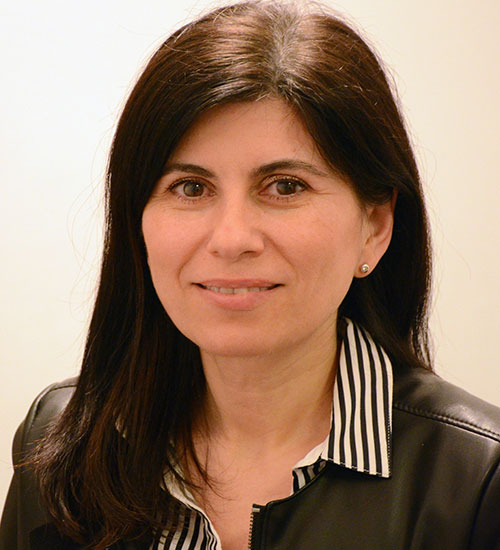
Dr. Mary (Maria) Kalyva is a Lecturer in Endodontology at the School of Dentistry, European University Cyprus where she coordinates both preclinical and clinical endodontic courses and contributes to curriculum delivery across undergraduate training. She obtained her DDS from the National and Kapodistrian University of Athens (1998), completed postgraduate training in Endodontology at the Aristotle University of Thessaloniki (2001), and received a PhD in Endodontology (2010) with a thesis on the role of TGF-β1 in dental pulp repair, supported by competitive funding. Her academic experience includes long-standing involvement in clinical instruction and research at the Aristotle University of Thessaloniki, followed by her current appointment in Nicosia (2022–present). Her research focuses on the biology of the dentine–pulp complex and its responses to growth factors, alongside clinical outcomes related to endodontic techniques and materials. In parallel, she investigates evidence-based educational innovation in dentistry, including low-stakes assessment and interprofessional learning, aiming to strengthen active learning and critical thinking. Her research has been published in peer-reviewed journals including the International Endodontic Journal, the Journal of Endodontics and Connective Tissue Research. She actively contributes to professional service through the Hellenic Association of Endodontists, including scientific committee responsibilities and support of scientific events, and holds Certified Membership status with the European Society of Endodontology. She also practices microscopic endodontics in her private practice in Athens.
Artificial Intelligence in Endodontics: Current Applications and Future Directions
Artificial intelligence (AI) is becoming increasingly relevant in endodontics, with growing applications in diagnosis, treatment planning, outcome prediction, patient communication, education, and clinical workflow. Its current role is most visible in the analysis of radiographic images, where it may support the detection of periapical lesions, assessment of root canal morphology, recognition of anatomical variations, and identification of complex conditions such as resorptive defects. AI may also improve consistency in interpretation and support more structured reporting.
Beyond diagnosis, AI is expanding into other important areas of endodontic practice. Predictive models are being explored for treatment outcomes, prognosis, and case difficulty, with the aim of supporting more individualized clinical decisions. AI-based tools may also improve patient information and communication, particularly through systems designed to answer common endodontic questions more clearly and efficiently. In education, AI is opening new possibilities through virtual patients, image-based assessment, and interactive learning environments that may strengthen diagnostic training and clinical reasoning. Robotics represents a further emerging direction, with early applications in guided access, microsurgery, and other technically demanding procedures, although these remain at an early stage of development.
At the same time, important challenges remain, including validation, generalizability, interpretability, ethics, and the gap between promising research findings and routine clinical implementation. AI is therefore best understood as a tool to support, rather than replace clinical judgement, with the potential to improve efficiency, consistency, education, and patient care when used critically and responsibly. AI is no longer a distant prospect in endodontics; it is already influencing how information is interpreted, how decisions are supported, and how future care may be delivered. The real challenge now is not whether AI will shape the field, but how clinicians will guide that change.
Dr. Mary (Maria) Kalyva is a Lecturer in Endodontology at the School of Dentistry, European University Cyprus where she coordinates both preclinical and clinical endodontic courses and contributes to curriculum delivery across undergraduate training. She obtained her DDS from the National and Kapodistrian University of Athens (1998), completed postgraduate training in Endodontology at the Aristotle University of Thessaloniki (2001), and received a PhD in Endodontology (2010) with a thesis on the role of TGF-β1 in dental pulp repair, supported by competitive funding. Her academic experience includes long-standing involvement in clinical instruction and research at the Aristotle University of Thessaloniki, followed by her current appointment in Nicosia (2022–present). Her research focuses on the biology of the dentine–pulp complex and its responses to growth factors, alongside clinical outcomes related to endodontic techniques and materials. In parallel, she investigates evidence-based educational innovation in dentistry, including low-stakes assessment and interprofessional learning, aiming to strengthen active learning and critical thinking. Her research has been published in peer-reviewed journals including the International Endodontic Journal, the Journal of Endodontics and Connective Tissue Research. She actively contributes to professional service through the Hellenic Association of Endodontists, including scientific committee responsibilities and support of scientific events, and holds Certified Membership status with the European Society of Endodontology. She also practices microscopic endodontics in her private practice in Athens.
This site uses cookies. Find out more about cookies and how you can refuse them.