Share This Speaker

Orthodontics, upper airway anatomy and sleep apnoea. Linking 3D technologies with diagnosis and management.
Obstructive Sleep Apnoea (OSA) is the most common sleep-related breathing disorder with serious medical sequelae experienced by both adults and children. Despite the relatively high prevalence of OSA, the majority of patients with moderate to severe OSA still remain undiagnosed while the serious general health consequences that accompany the syndrome highlight the importance of prompt diagnosis and management.
It is advocated that several orthodontic interventions may have either a positive impact or a negative effect on the anatomy and function of the upper airways, extrapolating an indirect relationship with breathing and OSA management; however, the existing evidence is sparse, controversial and of questionable quality.
The aim of the presentation is to focus and discuss on the current evidence regarding orthodontics and its effects on the upper airway anatomy and OSA.
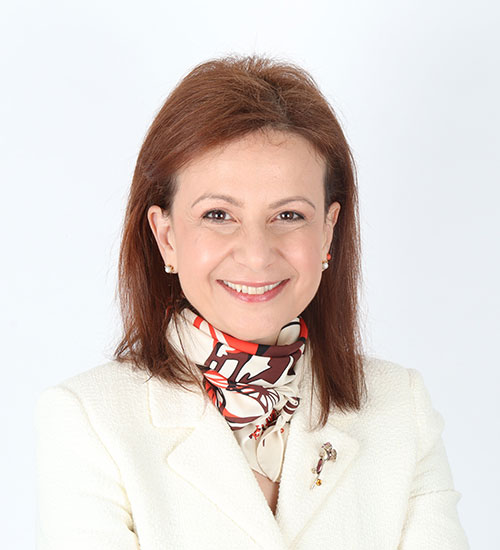
Dr Alexandra K. Papadopoulou
Dr Alexandra K. Papadopoulou obtained her Dental Degree, Specialty Degree in Oral Surgery, Specialty Degree in Orthodontics and PhD from the School of Dentistry, Faculty of Medicine and Health, Aristotle University of Thessaloniki, Greece.
She is currently Assistant Professor in the Department of Orthodontics, Aristotle University of Thessaloniki, Greece. She served for 5 years as Senior Research and Academic staff in the Division of Orthodontics of the University of Geneva, Switzerland and for seven years as a Senior Lecturer in the Discipline of Orthodontics, the University of Sydney, Australia.
Dr Papadopoulou has supervised several Doctorates in Dentistry and Higher Research Degree projects (Masters and PhDs). She has published numerous research papers in high impact, peer-reviewed journals receiving prizes for her contribution to the specialty’s research. Her main research interests focus on the efficacy of dentofacial orthopaedic treatment, the effects of orthodontic interventions on the upper airways and the management of obstructive sleep apnoea (OSA), skeletal anchorage devices, 3D diagnosis and treatment planning.
Orthodontics, upper airway anatomy and sleep apnoea. Linking 3D technologies with diagnosis and management.
Obstructive Sleep Apnoea (OSA) is the most common sleep-related breathing disorder with serious medical sequelae experienced by both adults and children. Despite the relatively high prevalence of OSA, the majority of patients with moderate to severe OSA still remain undiagnosed while the serious general health consequences that accompany the syndrome highlight the importance of prompt diagnosis and management.
It is advocated that several orthodontic interventions may have either a positive impact or a negative effect on the anatomy and function of the upper airways, extrapolating an indirect relationship with breathing and OSA management; however, the existing evidence is sparse, controversial and of questionable quality.
The aim of the presentation is to focus and discuss on the current evidence regarding orthodontics and its effects on the upper airway anatomy and OSA.
Dr Alexandra K. Papadopoulou
Dr Alexandra K. Papadopoulou obtained her Dental Degree, Specialty Degree in Oral Surgery, Specialty Degree in Orthodontics and PhD from the School of Dentistry, Faculty of Medicine and Health, Aristotle University of Thessaloniki, Greece.
She is currently Assistant Professor in the Department of Orthodontics, Aristotle University of Thessaloniki, Greece. She served for 5 years as Senior Research and Academic staff in the Division of Orthodontics of the University of Geneva, Switzerland and for seven years as a Senior Lecturer in the Discipline of Orthodontics, the University of Sydney, Australia.
Dr Papadopoulou has supervised several Doctorates in Dentistry and Higher Research Degree projects (Masters and PhDs). She has published numerous research papers in high impact, peer-reviewed journals receiving prizes for her contribution to the specialty’s research. Her main research interests focus on the efficacy of dentofacial orthopaedic treatment, the effects of orthodontic interventions on the upper airways and the management of obstructive sleep apnoea (OSA), skeletal anchorage devices, 3D diagnosis and treatment planning.
This site uses cookies. Find out more about cookies and how you can refuse them.