Share This Speaker

Nitrous Oxide Sedation: History, Advantages, Limitations, Indications and Contraindications
Nitrous oxide–oxygen inhalation sedation is a well-established pharmacological technique for behaviour management in paediatric dentistry, widely used for the control of dental fear, anxiety and limited cooperation. When applied according to current clinical guidelines, it represents a safe and effective adjunct to basic behavioural guidance techniques. This presentation reviews the clinical use of nitrous oxide sedation, focusing on its mechanism of action, indications, contraindications, advantages and limitations in children. Nitrous oxide exerts anxiolytic, analgesic and mild sedative effects through interaction with opioid, GABAergic, benzodiazepine and NMDA receptors. Its rapid onset of action, titratability and fast recovery, combined with preservation of protective reflexes, make it particularly suitable for outpatient paediatric dental care. Clinically, nitrous oxide sedation contributes to reduced fear and anxiety, improved communication between the child and the dentist, increased efficiency of treatment and suppression of the gag reflex. However, its use requires careful patient selection. Limitations include variable acceptance of the nasal mask, possible nausea or vomiting, lack of postoperative analgesia, occupational exposure concerns and equipment-related costs. Importantly, nitrous oxide sedation does not replace local anaesthesia or communication-based techniques. Clear indications and contraindications are discussed, taking into account behavioural, local and systemic factors, as well as the child’s age and medical history. When appropriately indicated and administered within established guidelines, nitrous oxide–oxygen inhalation sedation remains a valuable clinical tool in contemporary paediatric dentistry.
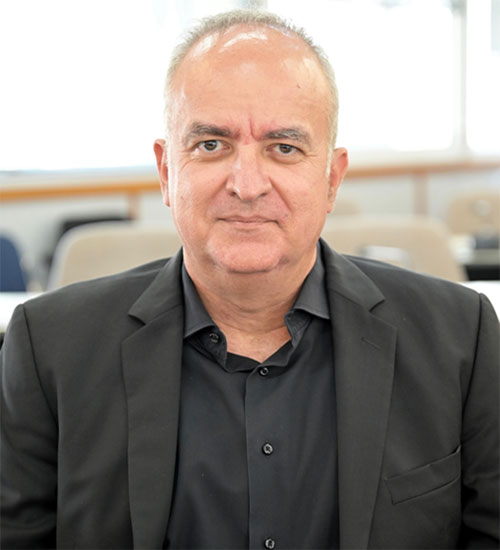
Arhakis Aristidis
Associate Professor
E-Mail: arhakis@dent.auth.gr
Aristidis Arhakis graduated from the School of Dentistry of the Aristotle University of Thessaloniki, Greece, in 1997 (DDS). He subsequently completed his postgraduate training in Paediatric Dentistry at the Leeds Dental Institute, United Kingdom, where he was awarded the degree of Master of Dental Science (MDentSci) for the period 1999–2001. Following his postgraduate studies, he worked as a Community Dentist with a specialty in Paediatric Dentistry at a Public Dental Centre in Bradford, United Kingdom, from 2001 to 2002. He obtained his PhD in 2013 from the Department of Preventive Dentistry, Periodontology and Implant Biology at the School of Dentistry of the Aristotle University of Thessaloniki. From 2014 to 2018, he served as a University Scholar at the Department of Paediatric Dentistry. He was appointed Assistant Professor at the School of Dentistry in 2018, a position he held until 2024, when he was elected Associate Professor. His research output includes more than 50 publications in international peer-reviewed journals, with over 770 citations, as well as at least 25 publications in Greek scientific journals. He is the author of the book “Paediatric Dentistry: Laboratory Manual” (in Greek), published in 2015 by Kallipos Publications. He has also authored five chapters in the Greek-language textbook “Paediatric Dentistry” (2019, Filatos Publications) and four chapters in the international textbook “Paediatric Dentistry” (Kotsanos N., Sarnat H., Park K.), published in 2022 by Springer Nature. He has served as a peer reviewer for more than 20 international scientific journals. He has participated in the supervision of two doctoral theses and eight postgraduate dissertations, four of which received awards for best presentation at international paediatric dentistry conferences. He is the Councillor for Greece at the European Academy of Paediatric Dentistry (EAPD). He is a member of the Board of Directors of the Hellenic Society of Preventive Dentistry and the Hellenic Paediatric Dentistry Society. He currently serves as Director of the Postgraduate Programme in Paediatric Dentistry at the Aristotle University of Thessaloniki. He has delivered more than 150 presentations at national and international conferences on topics including dental trauma, saliva, dental fear, nitrous oxide sedation, and the assessment of dental fear through salivary biomarkers.
Nitrous Oxide Sedation: History, Advantages, Limitations, Indications and Contraindications
Nitrous oxide–oxygen inhalation sedation is a well-established pharmacological technique for behaviour management in paediatric dentistry, widely used for the control of dental fear, anxiety and limited cooperation. When applied according to current clinical guidelines, it represents a safe and effective adjunct to basic behavioural guidance techniques. This presentation reviews the clinical use of nitrous oxide sedation, focusing on its mechanism of action, indications, contraindications, advantages and limitations in children. Nitrous oxide exerts anxiolytic, analgesic and mild sedative effects through interaction with opioid, GABAergic, benzodiazepine and NMDA receptors. Its rapid onset of action, titratability and fast recovery, combined with preservation of protective reflexes, make it particularly suitable for outpatient paediatric dental care. Clinically, nitrous oxide sedation contributes to reduced fear and anxiety, improved communication between the child and the dentist, increased efficiency of treatment and suppression of the gag reflex. However, its use requires careful patient selection. Limitations include variable acceptance of the nasal mask, possible nausea or vomiting, lack of postoperative analgesia, occupational exposure concerns and equipment-related costs. Importantly, nitrous oxide sedation does not replace local anaesthesia or communication-based techniques. Clear indications and contraindications are discussed, taking into account behavioural, local and systemic factors, as well as the child’s age and medical history. When appropriately indicated and administered within established guidelines, nitrous oxide–oxygen inhalation sedation remains a valuable clinical tool in contemporary paediatric dentistry.
Arhakis Aristidis
Associate Professor
E-Mail: arhakis@dent.auth.gr
Aristidis Arhakis graduated from the School of Dentistry of the Aristotle University of Thessaloniki, Greece, in 1997 (DDS). He subsequently completed his postgraduate training in Paediatric Dentistry at the Leeds Dental Institute, United Kingdom, where he was awarded the degree of Master of Dental Science (MDentSci) for the period 1999–2001. Following his postgraduate studies, he worked as a Community Dentist with a specialty in Paediatric Dentistry at a Public Dental Centre in Bradford, United Kingdom, from 2001 to 2002. He obtained his PhD in 2013 from the Department of Preventive Dentistry, Periodontology and Implant Biology at the School of Dentistry of the Aristotle University of Thessaloniki. From 2014 to 2018, he served as a University Scholar at the Department of Paediatric Dentistry. He was appointed Assistant Professor at the School of Dentistry in 2018, a position he held until 2024, when he was elected Associate Professor. His research output includes more than 50 publications in international peer-reviewed journals, with over 770 citations, as well as at least 25 publications in Greek scientific journals. He is the author of the book “Paediatric Dentistry: Laboratory Manual” (in Greek), published in 2015 by Kallipos Publications. He has also authored five chapters in the Greek-language textbook “Paediatric Dentistry” (2019, Filatos Publications) and four chapters in the international textbook “Paediatric Dentistry” (Kotsanos N., Sarnat H., Park K.), published in 2022 by Springer Nature. He has served as a peer reviewer for more than 20 international scientific journals. He has participated in the supervision of two doctoral theses and eight postgraduate dissertations, four of which received awards for best presentation at international paediatric dentistry conferences. He is the Councillor for Greece at the European Academy of Paediatric Dentistry (EAPD). He is a member of the Board of Directors of the Hellenic Society of Preventive Dentistry and the Hellenic Paediatric Dentistry Society. He currently serves as Director of the Postgraduate Programme in Paediatric Dentistry at the Aristotle University of Thessaloniki. He has delivered more than 150 presentations at national and international conferences on topics including dental trauma, saliva, dental fear, nitrous oxide sedation, and the assessment of dental fear through salivary biomarkers.
This site uses cookies. Find out more about cookies and how you can refuse them.