Share This Speaker

SQUAMOUS CELL CARCINOMA OF THE TONGUE. CURRENT DATA ON ITS TREATMENT
Squamous cell carcinoma of the tongue is one of the most common locations of oral cavity cancer and often gives cervical lymph node metastases. It is very important to make the diagnosis in the early stages in order to treat it in time and to make the patient's recovery as likely as possible. Surgical treatment of tongue cancer, if feasible, is the treatment of choice. However, research is constantly advancing and new data are emerging in the treatment of tongue cancer.
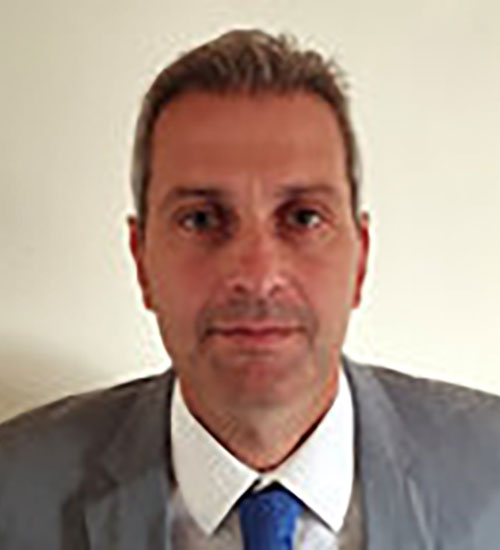
Konstantinos Paraskevopoulos is an assistant professor at the Aristotle University of Thessaloniki, Greece. He works at the University Clinic of Oral and Maxillofacial Surgery of the General Hospital G. Papanikolaou in Thessaloniki, Greece. He has a medical degree and a dental degree. He is an oral and maxillofacial surgeon who deals surgically with the entire spectrum of the specialty. He is a doctor with a particular interest in oncology, facial reconstruction, traumatology and research. He holds a doctoral degree as well as postdoctoral research. He has received further training in European centers of oral and maxillofacial surgery. He has participated for many years in various research protocols in collaboration with other specialties and mainly with oncologists, pathologists and biologists. He constantly participates in various conferences as a speaker and has a constant presence in all international conferences of the specialty of oral and maxillofacial surgery. He has a rich resume with many international publications in approved international journals. He is the author of books in oral and maxillofacial surgery as well as other medical books. For many years he has been actively participating in the education of medical students, dental students, Erasmus students and specialists in Oral and Maxillofacial Surgery.
SQUAMOUS CELL CARCINOMA OF THE TONGUE. CURRENT DATA ON ITS TREATMENT
Squamous cell carcinoma of the tongue is one of the most common locations of oral cavity cancer and often gives cervical lymph node metastases. It is very important to make the diagnosis in the early stages in order to treat it in time and to make the patient's recovery as likely as possible. Surgical treatment of tongue cancer, if feasible, is the treatment of choice. However, research is constantly advancing and new data are emerging in the treatment of tongue cancer.
Konstantinos Paraskevopoulos is an assistant professor at the Aristotle University of Thessaloniki, Greece. He works at the University Clinic of Oral and Maxillofacial Surgery of the General Hospital G. Papanikolaou in Thessaloniki, Greece. He has a medical degree and a dental degree. He is an oral and maxillofacial surgeon who deals surgically with the entire spectrum of the specialty. He is a doctor with a particular interest in oncology, facial reconstruction, traumatology and research. He holds a doctoral degree as well as postdoctoral research. He has received further training in European centers of oral and maxillofacial surgery. He has participated for many years in various research protocols in collaboration with other specialties and mainly with oncologists, pathologists and biologists. He constantly participates in various conferences as a speaker and has a constant presence in all international conferences of the specialty of oral and maxillofacial surgery. He has a rich resume with many international publications in approved international journals. He is the author of books in oral and maxillofacial surgery as well as other medical books. For many years he has been actively participating in the education of medical students, dental students, Erasmus students and specialists in Oral and Maxillofacial Surgery.
This site uses cookies. Find out more about cookies and how you can refuse them.