Share This Speaker

The rehabilitation of edentulous patients with implant-supported prostheses represents one of the most technically demanding procedures in contemporary prosthodontics. Successful outcomes depend on precise prosthetically driven treatment planning, which precedes surgical implant placement and determines the biomechanical and restorative framework of the final reconstruction.
The introduction of digital workflows—particularly intraoral scanning—has profoundly influenced implant prosthodontics by enhancing accuracy, predictability, and clinical efficiency. However, the application of intraoral scanners in fully edentulous cases has historically been limited by inherent technical challenges. The primary source of inaccuracy was attributed to discrepancies between the scanned geometries of digital transfer components (scan bodies) and their corresponding library files within CAD software environments. These mismatches frequently led to cumulative errors in virtual implant positioning and, consequently, compromised passive fit of definitive prostheses. As a result, digital protocols were often modified or supplemented with conventional analog verification procedures.
Recent advancements in digital dentistry have introduced photogrammetry as a highly precise method for capturing the three-dimensional spatial position of multiple implants. By eliminating dependence on soft-tissue-based stitching algorithms and minimizing geometric distortion, photogrammetry has significantly improved the accuracy of full-arch implant impressions. The subsequent development of intraoral photogrammetry has further streamlined the clinical workflow, allowing direct intraoral capture of implant positions while reducing chairside time and laboratory complexity.
The aim of this lecture is to present and critically compare contemporary digital protocols for full-arch implant rehabilitation, including conventional intraoral scanning techniques and intraoral photogrammetry systems, with emphasis on clinical indications, accuracy parameters, and workflow optimization.
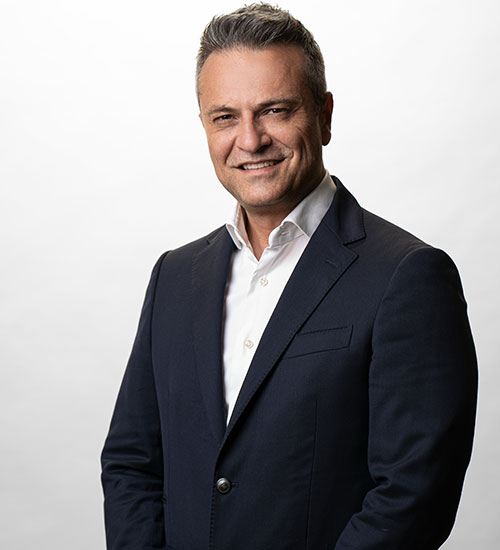
Prof.dr Miodrag Šćepanović
Implantology-research center
School of Dental medicine
University od Belgrade
Graduated in the Dental Department, Faculty of Medicine in Pristina in 1997. Postgraduate training an Master studies in Clinic for prosthodontics School of Dental Medicine in Belgrade University. From 2002. full time employed at Clinic for prosthodontics School of Dental Medicine in Belgrade University. In 2006. Master degree and in 2011. PhD related to implant dentistry. From 2011. member of ITI center Belgrade, in charge for prosthodontic part of education. Instructor, lecturer and key opinion leader for many dental companies. From 2015-2020. senior Lecturer on the BPP University School of Health, London, UK. From 2023. Professor at Implantology and Research center School of Dental Medicine Belgrade University. One of the founders of Serbian association for esthetic dentistry. Research, publishing and clinical activities are in the field of implant dentistry, digital dentistry, esthetic dentistry. Founder and owner of private practice “A1 Dental Studio” in Belgrade.
The rehabilitation of edentulous patients with implant-supported prostheses represents one of the most technically demanding procedures in contemporary prosthodontics. Successful outcomes depend on precise prosthetically driven treatment planning, which precedes surgical implant placement and determines the biomechanical and restorative framework of the final reconstruction.
The introduction of digital workflows—particularly intraoral scanning—has profoundly influenced implant prosthodontics by enhancing accuracy, predictability, and clinical efficiency. However, the application of intraoral scanners in fully edentulous cases has historically been limited by inherent technical challenges. The primary source of inaccuracy was attributed to discrepancies between the scanned geometries of digital transfer components (scan bodies) and their corresponding library files within CAD software environments. These mismatches frequently led to cumulative errors in virtual implant positioning and, consequently, compromised passive fit of definitive prostheses. As a result, digital protocols were often modified or supplemented with conventional analog verification procedures.
Recent advancements in digital dentistry have introduced photogrammetry as a highly precise method for capturing the three-dimensional spatial position of multiple implants. By eliminating dependence on soft-tissue-based stitching algorithms and minimizing geometric distortion, photogrammetry has significantly improved the accuracy of full-arch implant impressions. The subsequent development of intraoral photogrammetry has further streamlined the clinical workflow, allowing direct intraoral capture of implant positions while reducing chairside time and laboratory complexity.
The aim of this lecture is to present and critically compare contemporary digital protocols for full-arch implant rehabilitation, including conventional intraoral scanning techniques and intraoral photogrammetry systems, with emphasis on clinical indications, accuracy parameters, and workflow optimization.
Prof.dr Miodrag Šćepanović
Implantology-research center
School of Dental medicine
University od Belgrade
Graduated in the Dental Department, Faculty of Medicine in Pristina in 1997. Postgraduate training an Master studies in Clinic for prosthodontics School of Dental Medicine in Belgrade University. From 2002. full time employed at Clinic for prosthodontics School of Dental Medicine in Belgrade University. In 2006. Master degree and in 2011. PhD related to implant dentistry. From 2011. member of ITI center Belgrade, in charge for prosthodontic part of education. Instructor, lecturer and key opinion leader for many dental companies. From 2015-2020. senior Lecturer on the BPP University School of Health, London, UK. From 2023. Professor at Implantology and Research center School of Dental Medicine Belgrade University. One of the founders of Serbian association for esthetic dentistry. Research, publishing and clinical activities are in the field of implant dentistry, digital dentistry, esthetic dentistry. Founder and owner of private practice “A1 Dental Studio” in Belgrade.
This site uses cookies. Find out more about cookies and how you can refuse them.