Share This Speaker

Recurrence and Malignant Transformation of Oral Potentially Malignant Disorders (PMDs): Frequency and Risk Stratification
Oral potentially malignant disorders (OPMDs) comprise a heterogeneous group of conditions characterized by an increased risk of progression to oral squamous cell carcinoma (OSCC). Given the poor prognosis of OSCC and its significant physical, psychological, and financial burden, early detection, accurate diagnosis, risk assessment, and effective management of OPMDs are critical.
However, optimal management of OPMDs remains challenging due to the marked heterogeneity in their clinical presentation, histopathologic features, and biological behavior, including variable rates of recurrence and malignant transformation (MT). Oral leukoplakia (OL), the most common OPMD in Western populations, exhibits a broad spectrum of clinicopathologic characteristics and outcomes. In contrast, erythroplakia and proliferative verrucous leukoplakia, although less frequent, are associated with a substantially higher risk of recurrence and MT.
While biopsy and histopathologic evaluation remain the gold standard for diagnosis and risk stratification, accurate prediction of recurrence and MT is still challenging and largely suboptimal. Numerous demographic, clinical, histopathologic, and molecular factors have been proposed as potential predictors; however, no single biomarker has demonstrated sufficient reliability. Therefore, a major emerging goal is the development of integrated models that combine multiple prognostic and predictive parameters—potentially enhanced by artificial intelligence—to improve individualized risk assessment and guide clinical decision-making.
The aim of this lecture is to present current evidence on the frequency and clinical significance of recurrence and MT in OPMDs, and to discuss both established and emerging approaches to risk stratification, with the goal of improving prognostication, treatment planning, and long-term surveillance.
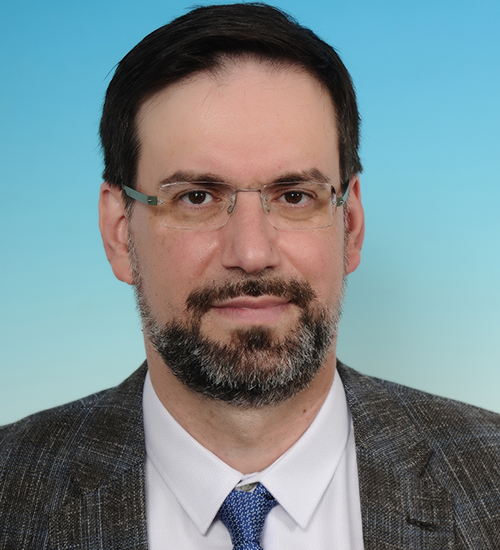
Professor Nikolaos G. Nikitakis received his DDS and MD from the National and Kapodistrian University of Athens (NKUA), Greece, and his PhD from the University of Maryland, Baltimore (UMB), USA. He is a Diplomate of the American Board of Oral and Maxillofacial Pathology (ABOMP) and a Fellow of the American Academy of Oral and Maxillofacial Pathology (AAOMP) and the American Academy of Oral Medicine (AAOM). He has also completed a sabbatical at the School of Dentistry and MD Anderson Cancer Center at the University of Texas at Houston (UTH), USA.
Prof. Nikitakis is currently Dean (2022–present), as well as Professor and Chair (2018–present) of the Department of Oral Medicine & Pathology and Hospital Dentistry, School of Dentistry, NKUA.
He is Past President and a member of the Executive Committee and Board of the European Association of Oral Medicine (EAOM), where he served as Secretary General (2014–2018) and President (2018–2021). He is also currently President of the Hellenic Association of Oral Medicine and Pathology (HAOMP) (2015–present).
His clinical interests include the clinical and histopathologic diagnosis and management of oral and maxillofacial diseases, while his research focuses primarily on oral, head and neck oncology/cancer research.
He has authored over 275 peer-reviewed publications and 200 abstracts, with approximately 4,300 citations and h-index: 38 on Scopus and 7,000 citations and h-index 47 on Google Scholar. He is author of a textbook in Contemporary Oral Medicine and Pathology and has contributed chapters to several textbooks and handbooks. He has also served on the Editorial Board of various scientific journals.
He has delivered invited lectures at numerous national and international meetings and has served as Visiting Professor/Lecturer at Universities across Europe, the Americas, and Asia. For his scientific contributions, he has received several honors and awards.
He is a strong advocate for the advancement of Oral Medicine and Pathology, as well as for international collaboration and globalization of the specialty. He has played a pivotal role in the establishment of EAOM Regional Meetings and, even more impactfully, in the development of joint EAOM–AAOM. He served as Chair of the Scientific Committee of the AAOM–EAOM Joint Meeting in 2025 (Las Vegas, USA) and will serve as President of the Congress and Chair of the Organizing Committee of the EAOM–AAOM Joint Meeting with global participation in Rhodes, Greece, on September 22–25, 2027.
Recurrence and Malignant Transformation of Oral Potentially Malignant Disorders (PMDs): Frequency and Risk Stratification
Oral potentially malignant disorders (OPMDs) comprise a heterogeneous group of conditions characterized by an increased risk of progression to oral squamous cell carcinoma (OSCC). Given the poor prognosis of OSCC and its significant physical, psychological, and financial burden, early detection, accurate diagnosis, risk assessment, and effective management of OPMDs are critical.
However, optimal management of OPMDs remains challenging due to the marked heterogeneity in their clinical presentation, histopathologic features, and biological behavior, including variable rates of recurrence and malignant transformation (MT). Oral leukoplakia (OL), the most common OPMD in Western populations, exhibits a broad spectrum of clinicopathologic characteristics and outcomes. In contrast, erythroplakia and proliferative verrucous leukoplakia, although less frequent, are associated with a substantially higher risk of recurrence and MT.
While biopsy and histopathologic evaluation remain the gold standard for diagnosis and risk stratification, accurate prediction of recurrence and MT is still challenging and largely suboptimal. Numerous demographic, clinical, histopathologic, and molecular factors have been proposed as potential predictors; however, no single biomarker has demonstrated sufficient reliability. Therefore, a major emerging goal is the development of integrated models that combine multiple prognostic and predictive parameters—potentially enhanced by artificial intelligence—to improve individualized risk assessment and guide clinical decision-making.
The aim of this lecture is to present current evidence on the frequency and clinical significance of recurrence and MT in OPMDs, and to discuss both established and emerging approaches to risk stratification, with the goal of improving prognostication, treatment planning, and long-term surveillance.
Professor Nikolaos G. Nikitakis received his DDS and MD from the National and Kapodistrian University of Athens (NKUA), Greece, and his PhD from the University of Maryland, Baltimore (UMB), USA. He is a Diplomate of the American Board of Oral and Maxillofacial Pathology (ABOMP) and a Fellow of the American Academy of Oral and Maxillofacial Pathology (AAOMP) and the American Academy of Oral Medicine (AAOM). He has also completed a sabbatical at the School of Dentistry and MD Anderson Cancer Center at the University of Texas at Houston (UTH), USA.
Prof. Nikitakis is currently Dean (2022–present), as well as Professor and Chair (2018–present) of the Department of Oral Medicine & Pathology and Hospital Dentistry, School of Dentistry, NKUA.
He is Past President and a member of the Executive Committee and Board of the European Association of Oral Medicine (EAOM), where he served as Secretary General (2014–2018) and President (2018–2021). He is also currently President of the Hellenic Association of Oral Medicine and Pathology (HAOMP) (2015–present).
His clinical interests include the clinical and histopathologic diagnosis and management of oral and maxillofacial diseases, while his research focuses primarily on oral, head and neck oncology/cancer research.
He has authored over 275 peer-reviewed publications and 200 abstracts, with approximately 4,300 citations and h-index: 38 on Scopus and 7,000 citations and h-index 47 on Google Scholar. He is author of a textbook in Contemporary Oral Medicine and Pathology and has contributed chapters to several textbooks and handbooks. He has also served on the Editorial Board of various scientific journals.
He has delivered invited lectures at numerous national and international meetings and has served as Visiting Professor/Lecturer at Universities across Europe, the Americas, and Asia. For his scientific contributions, he has received several honors and awards.
He is a strong advocate for the advancement of Oral Medicine and Pathology, as well as for international collaboration and globalization of the specialty. He has played a pivotal role in the establishment of EAOM Regional Meetings and, even more impactfully, in the development of joint EAOM–AAOM. He served as Chair of the Scientific Committee of the AAOM–EAOM Joint Meeting in 2025 (Las Vegas, USA) and will serve as President of the Congress and Chair of the Organizing Committee of the EAOM–AAOM Joint Meeting with global participation in Rhodes, Greece, on September 22–25, 2027.
This site uses cookies. Find out more about cookies and how you can refuse them.